What’s it like attending the CIEP Conference? My 3 highlights
What is the CIEP Conference and why did I go?
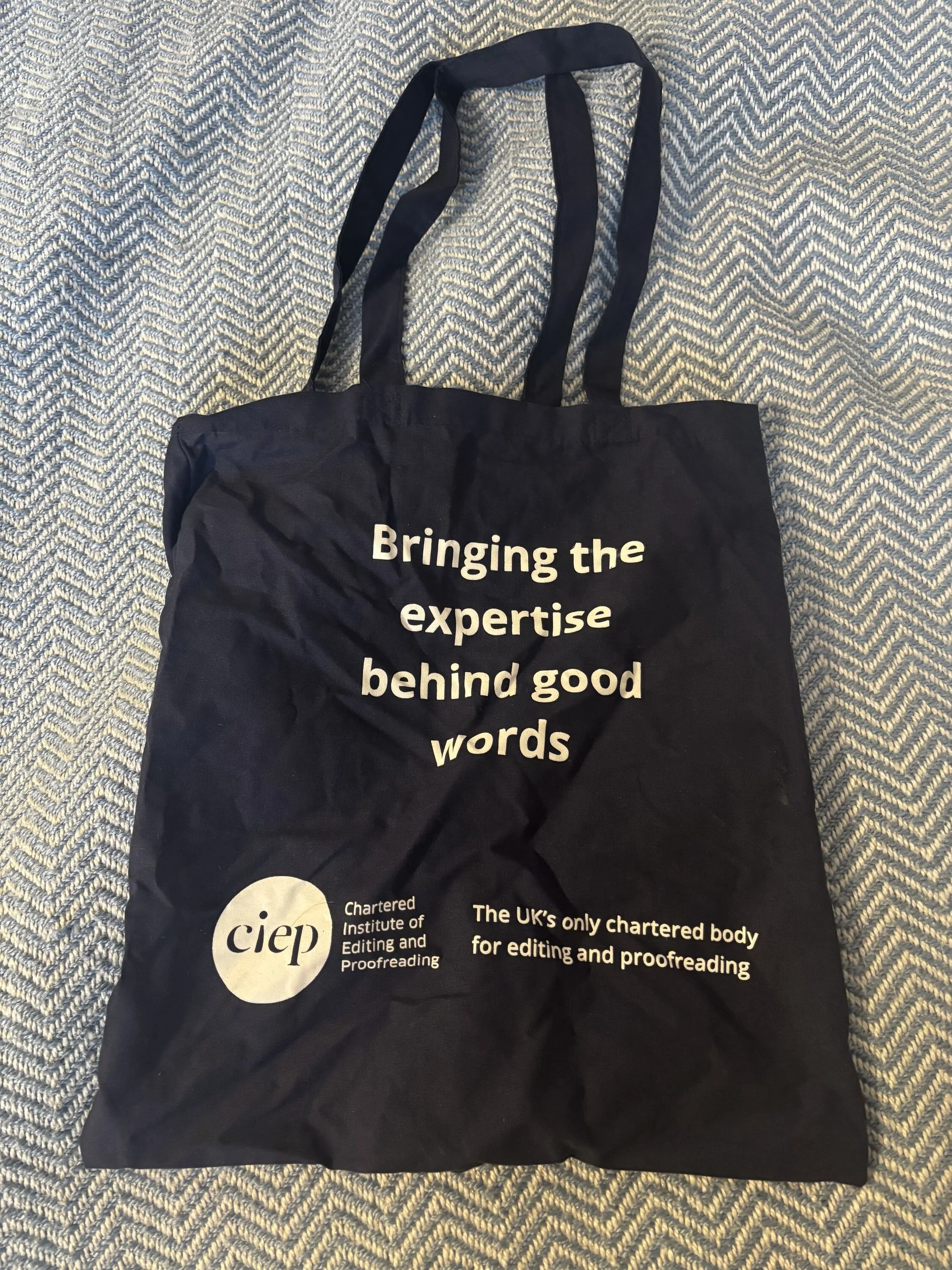
The CIEP Conference is an annual event hosted by the Chartered Institute of Editing and Proofreading (CIEP). Members get a discount, but you don't have to be a member to attend. The event covers professional development, networking and discussions on industry trends, with guest speakers, workshops, panel sessions, and the famous quiz over dinner. It is hybrid, so you can attend online if that's easier for you.
I chose to go in person this year because the programme looked so promising, and because I wanted to get the most from it. Frankly, I had also seen so many lovely people via a screen for too long and was eager to meet them in person!
The theme for 2026 was 'More than words: the evolving role of the editorial professional'. The last CIEP Conference I attended was in 2024 (online) and you can read my highlights from that year here and here. Writing this post today serves two purposes: selfishly, it helps me digest all the information from the sessions and assimilate that into something coherent, but it also shares that information with others, hopefully encouraging them to attend in future.
My 3 main CIEP conference highlights
It's impossible to sum up a packed programme in one post. But I'd say a common theme from the sessions I attended was showing up as your whole self professionally, and focusing on the broad range of skills and life experiences you bring to clients. I've summarised my own three highlights below, as experienced from my personal perspective.
Authenticity and humanity in professional contexts
My reflections here are mainly drawn from the sessions by Heather Ivatt, founder of the Ivatt Editorial Consultancy, on performing an Editorial Impact Assessment (EIA), and by Sarah Giles, in her session entitled The Authenticity Advantage.
We editors and proofreaders bring lots of benefits to the editorial partnership that go far beyond our improvements to the words themselves. I think we already know that, but we're sometimes less comfortable with examining and then elevating (to use Heather's term for how we develop, expand and package our services) those benefits. But if we examine our identities and lives beyond editing and proofreading, we can use what we uncover to establish a niche that's truly our own.
I'll try to explain. Life can throw up curveballs, and we can end up hurtling towards a different direction. But a 'life audit' and a 'skills audit' can tell us what we've gained from curveballs, planned pivots and assimilated knowledge. In doing that audit, we often uncover value that stands out. Our lives and our different identities beyond the page bring softer skills that can be of huge benefit to our clients and to readers.
Meanwhile, in Sarah's session, she pointed out that you can be professional and still be human. That may sound obvious, but if we look at how we describe ourselves in professional contexts, we may find that our quest to maintain a professional tone can get in the way of being memorable as a unique human being.
People connect with other people, and with what makes them unique and interesting, not perfect. It's easier to be consistent when you're being genuine and not trying to project a false self. It also invites honesty from other people and makes you more memorable. After Sarah's session, I spent some time tweaking and rewriting my CIEP directory entry to make sure it reflects my true inner values, beliefs and personality more closely.
2. The people
I'll start by saying that I think it's fantastic that this event is hybrid, enabling people to attend from a distance and also giving anyone suddenly no longer able to attend in person a fallback. But this year it felt like a big, positive step for me to go along in person. For me, Birmingham is easy to get to (when the trains are running as normal, ha ha) and I saw the value of emerging from my editing screen to show up and interact in the flesh.
I've been to many conferences among peers before, but that doesn't stop me from being nervous. I was so pleased to find that this was a welcoming space where I wouldn't need to worry about feeling uncomfortable or overlooked in any way. I had been a little daunted by the evening dinner and quiz, and that mild anxiety wasn't helped by receiving multiple interruptions just as I was going in, in the form of calls from my daughter at home!
But honestly, I had no need to worry. I felt I already knew some people well just from interacting online for a while now, so meeting them felt comfortable and familiar, in a good way. I was soon put at ease after feeling flustered by those calls from home. I was also grateful that there was a pre-conference networking session the day before, and of course for the conference sessions themselves. There was a lovely cosy feeling – something you might not expect from a conference. There were people I physically touched or hugged like old friends when I saw them (sorry if that was you!).
3. The advice
There was so much generously shared advice that I can't possibly summarise it all here, but here are some highlights I've noted down:
When deciding when you can call yourself a specialist, remember that specialisation is not a finishing line, it's accumulated experience. You need to be the editor, not someone who knows absolutely everything about a subject.
Rephrase and regroup to position yourself as essential.
When everything in business feels urgent, manage overwhelm by reviewing and mapping all your business activities and where you spend your valuable time. (Note in the margin: get myself a bigger whiteboard!)
Recognise imposter syndrome and what it tells you, and examine how you can reframe and overcome it: look at any distorted interpretations and feelings of shame over perceived failures.
Package your services and expertise in a more outcome-focused way to stand out in a saturated market.
Read between the lines of what a client is asking for and what they need. There are often two versions of a brief! (This resonated hard for any of us who have ever received a request concerning a manuscript that 'just needs a quick proofread').
Ask questions and offer guidance to get to the heart of what the client isn't saying. This moves us beyond simply 'correcting' (a given) to being an adviser and guide, and helps prevent problems later on.
Was attending the CIEP conference in person worth it?
The conference was a demonstration of the human value of editors and proofreaders, and each session illustrated how we bring so much more than 'correction' to each manuscript we work on. That's clearly shown in the way we approach queries and feedback with compassion and sensitivity, in the way we interact we each other as human professionals within a community, and in all the other accumulated experience we bring to each editing or proofreading project.
Not everyone who attended the event offers editing and proofreading as their only service (myself included), not everyone had been editing or proofreading for a long time, not everyone works in traditional publishing, and, in fact, not everyone was an editor or proofreader. Everyone was welcome and welcomed. Whatever your relationship with the editing and proofreading world, I hope this post gives you some idea of what it's like to attend in person, and encourages you to attend in future. I can confirm we're very nice people.